
Send a Courier from India to 180+ Countries
Get a Free Quote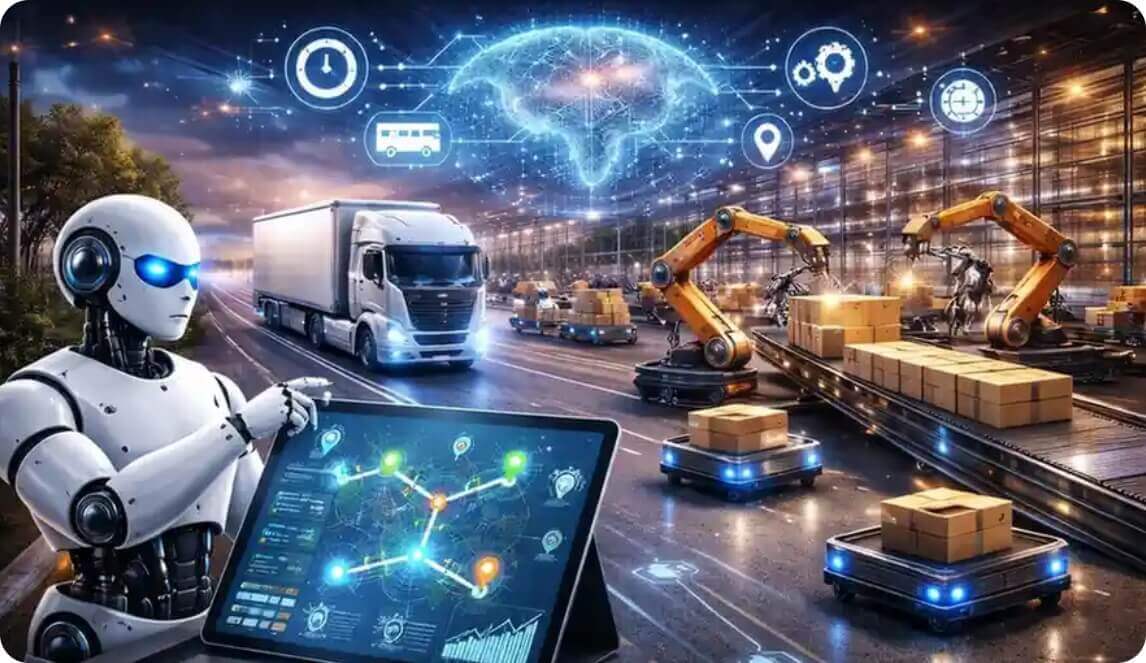
The logistics world doesn’t look the way it used to. Earlier, everything moved slowly, paperwork, manual coordination, fixed routes, and very little visibility once a parcel left the warehouse. Today, the experience feels completely different.
When booking an international courier service from India, you expect fast delivery and reliable service. You will also need real-time updates to know where their shipment is at every stage. This change has grown with online shopping, global business, and the growing demand for instant information.
Behind all of this, a lot is happening quietly. AI in logistics and automation is now handling the heavy lifting that used to take hours of human effort. They help plan better routes, reduce delays by predicting issues in advance, and make sure shipments move with fewer errors. Over time, courier operations have become less of manual tracking and more on systems that can think ahead.
So what does this really mean in practice?
Artificial Intelligence (AI) in logistics refers to systems that analyze data, learn patterns, and make decisions without human input. Automation refers to the use of technology to perform repetitive logistics tasks with minimal manual effort.
Together, they power modern systems like:
AI can improve efficiency, accuracy, and speed when handling real-time data. It can also reduce operational errors across global supply chains.
In simple terms:
AI decides “what is the best way.”
Automation executes “how it should be done.”
India is now a major global logistics hub due to booming exports, e-commerce, and digital adoption.
However, traditional courier systems face challenges like:
This is where international courier service providers from India are rapidly adopting AI-driven systems.
AI helps logistics companies:
Research shows that AI-powered logistics is essential due to increasing demand for fast, transparent, and reliable courier services.
Let’s break down how AI is practically used in modern courier systems.
One of the biggest revolutions in logistics is real-time tracking systems powered by AI and IoT.
Instead of static updates, AI now provides:
AI + IoT integration enables end-to-end shipment visibility across borders.
This is especially critical for international courier service from India, where customs and transit delays are common.
AI analyzes:
It then recommends the fastest and most cost-efficient delivery routes.
Studies show route optimization can significantly reduce fuel cost and improve delivery speed in logistics networks.
For courier logistics operations, this means:
Modern logistics hubs now use automation for:
AI-powered warehouses reduce human error and increase processing speed.
This is a major upgrade from traditional manual warehouse systems used in courier services in India.
Predictive analytics is one of the most powerful AI applications in logistics.
It helps companies:
For example, AI models analyze historical shipping patterns and seasonal spikes to prepare logistics capacity in advance.
This directly improves international courier service reliability from India.
Customer experience is a key part of courier logistics.
AI improves it through:
This reduces dependency on manual customer support teams while improving response time.
AI-powered routing and predictive planning reduce unnecessary delays by selecting the most efficient delivery paths in real time. This ensures quicker movement of shipments, especially in international courier services from India, where multiple checkpoints are involved.
By optimizing fuel consumption, reducing idle time, and minimizing manual intervention, AI helps logistics companies significantly cut down operational expenses. It also reduces dependency on large manpower for repetitive tasks in courier logistics operations.
Real-time tracking systems powered by AI provide continuous updates on shipment location and status. This improves transparency and builds stronger customer trust in international shipping services.
Automation reduces human errors in processes like sorting, labeling, and documentation, ensuring smoother workflow execution. This leads to fewer shipment mismatches and improved reliability in logistics automation systems.
AI systems allow logistics networks to handle increasing shipment volumes without compromising speed or accuracy. This is especially important for international courier services from India as global demand continues to grow.
Industry reports and logistics studies indicate AI can improve operational efficiency by up to 30–35% while significantly enhancing visibility and decision-making speed.
Setting up advanced AI systems requires investment in software and infrastructure, which can be expensive for logistics companies initially. Smaller courier businesses often find it difficult to adopt these systems quickly due to budget limitations.
Many traditional courier networks still run on older systems that are not designed to work with modern AI tools. Connecting new automation technology with these existing setups can be complex and time-consuming.
AI systems need accurate and well-structured data to make good decisions. However, logistics data can often be incomplete or inconsistent. If the input data is poor, it can directly affect tracking accuracy and delivery predictions.
Even with automation, some situations still require human judgment, especially in complex international shipping scenarios. Critical decisions like handling delays, customs issues, or exceptions cannot always be fully automated.
The future of international courier services and logistics operations is becoming smarter, faster, and more automated with AI technology.
Overall, AI in logistics and logistics automation is steadily reshaping courier logistics operations into a more predictive and efficient global system.
What’s happening in logistics today isn’t just a tech upgrade; it’s a real shift in how goods move across the world. The industry is moving away from manual processes toward smarter, data-driven systems that react in real time.
From international courier services in India to global shipping networks, AI and automation are improving speed, accuracy, and tracking. These changes make shipping smoother and more reliable for customers. They work behind the scenes to reduce delays and make deliveries more predictable.
As these systems improve, courier logistics operations will become simpler and more seamless. Shipments will move more smoothly from pickup to delivery.
AI in courier logistics uses shipping data to predict outcomes and improve delivery decisions. It helps with routing, tracking, and scheduling while reducing the need for constant human input.
AI helps international courier services from India improve route planning and predict delivery delays. It also supports real-time tracking and automated warehouse sorting.
Automation improves courier logistics operations by reducing manual work in sorting, labeling, tracking updates, and dispatching, making shipments faster and more accurate.
AI in logistics improves delivery speed, reduces operational errors, enhances tracking accuracy, and helps predict delays for smoother global shipping operations.
AI improves shipment tracking with real-time location updates and more accurate delivery estimates. It uses traffic, weather, and logistics data to improve tracking accuracy.
AI is important for global shipping because it helps manage complex international routes and reduce delays. It also improves coordination across different logistics checkpoints.
Logistics automation uses technology to handle repetitive shipping tasks such as sorting, scanning, warehouse management, and dispatching. It reduces manual work and helps make the shipping process faster and more efficient.
Yes, AI reduces delivery delays by predicting bottlenecks, optimizing delivery routes, and adjusting logistics plans in real time.
The future of courier logistics operations is AI-driven, with smarter tracking systems, automated warehouses, predictive delivery planning, and faster global shipping networks.
AI helps international courier companies by improving efficiency, reducing costs, increasing delivery accuracy, and making global shipping more reliable and transparent.