Home Blog 7 Must-Know Packaging Rules Before Sending an International Shipment
7 Must-Know Packaging Rules Before Sending an International Shipment
December 08, 2025
Anusha Inamdar
Have you ever wondered why some international shipments arrive perfectly, while others come back damaged, delayed, or stuck at customs? Most of the time, it’s not the courier’s fault. It’s packaging. One small mistake can break the rules of international shipping without you even realizing it. That’s why knowing the right international courier packaging rules is the secret to stress-free delivery.
From smart cushioning to following international shipment packaging rules, these tips can make the difference between a smooth global journey and an expensive shipping disaster.
The Right Way to Pack Your International Shipment
Choose Strong Packaging That Can Handle Long Journeys
The safety of your shipment depends on the box you choose because it determines how well your goods will be protected. Local deliveries are short and gentle. International shipping is not. Your package will travel through multiple countries, warehouses, and different modes of transportation.
Always use high-quality corrugated boxes. For heavy or fragile goods, go for double-wall or triple-wall cartons.
Make sure the box fits your product properly. Too much empty space in the package lets products move around, which leads to their damage.
Never reuse soft, torn, or weak boxes. They may collapse during transit.
International transportation needs strong packaging, which serves as your primary defense system.
Add Proper Cushioning to Absorb Shocks
Even the toughest box needs inner protection. Movement inside the box causes most shipping damage.
Wrap each item individually using bubble wrap, foam sheets, or padded covers.
Use packing paper, air pillows, and cushioning materials to fill all empty spaces.
Ensure items never touch each other or the box edges directly.
Good cushioning works like a safety belt, keeping everything secure during rough handling.
Add proper cushioning to Absorb Shocks, keeping everything secure during rough handling.
Pack Smart to Balance Weight and Space
International couriers calculate charges using volumetric weight. Poor packing methods increase both damage risk and shipping expenses.
Place heavier items at the bottom for stability. Keep lighter goods on top.
Use space efficiently without crushing items.
Pallet packaging provides better safety and handling for bulk shipments and large shipments.
Smart packing protects your parcel and controls shipping expenses.
Label Packages Clearly for Smooth Delivery
Shipping labels guide your parcel through every checkpoint, from pickup to customs.
Use bold, waterproof labels that maintain their visibility and do not fade or tear.
Display sender and receiver details on the top and side of the box.
Add handling instructions which include fragile, keep upright, and handle carefully.
Remove any old barcodes or shipping stickers.
Clear labeling speeds up delivery and reduces errors.
Follow International Customs Packaging Requirements
Every country has specific shipping and inspection rules. Ignoring them can lead to delays, penalties, or returned shipments.
The package must always contain correct invoices and packing lists.
The actual items in the package must match the declared contents of the package.
The correct weight, value, and dimensions of the delivery must be recorded.
Certain products require special packaging together with necessary permits and specific safety labels.
Your shipment will proceed without delays when you present proper documentation.
Seal Packages Securely to Prevent Damage
Weak seals create packaging failures even when packages are perfectly designed.
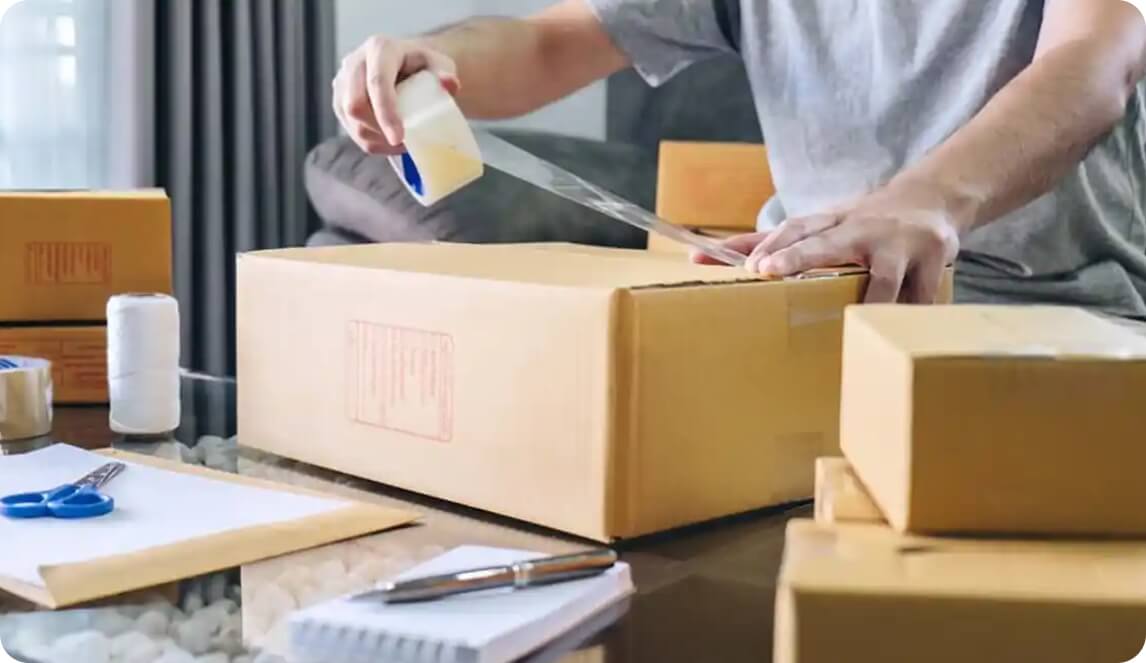
Users should use strong industrial packaging tape compared to household tape.
Tape should be applied across all openings in an “H” pattern to create maximum bond strength.
The protection of edges and corners requires strengthening because those areas experience the most pressure.
Shippers should use straps or reinforced bands to secure their heavy shipments.
The strong seals prevent moisture and dust entry while stopping unauthorized access to secure areas.
Test Your Package Before Shipping
Before you give your package to the delivery service, complete your safety check of the package.
Shake it gently, make sure nothing moves inside.
The object needs to be lifted and placed down so that its hidden empty areas can be detected.
The user needs to apply light pressure on the package sides to assess its structural integrity.
If anything shifts, reopen and improve cushioning.
A quick test can save you from expensive damage that would occur at a later time.
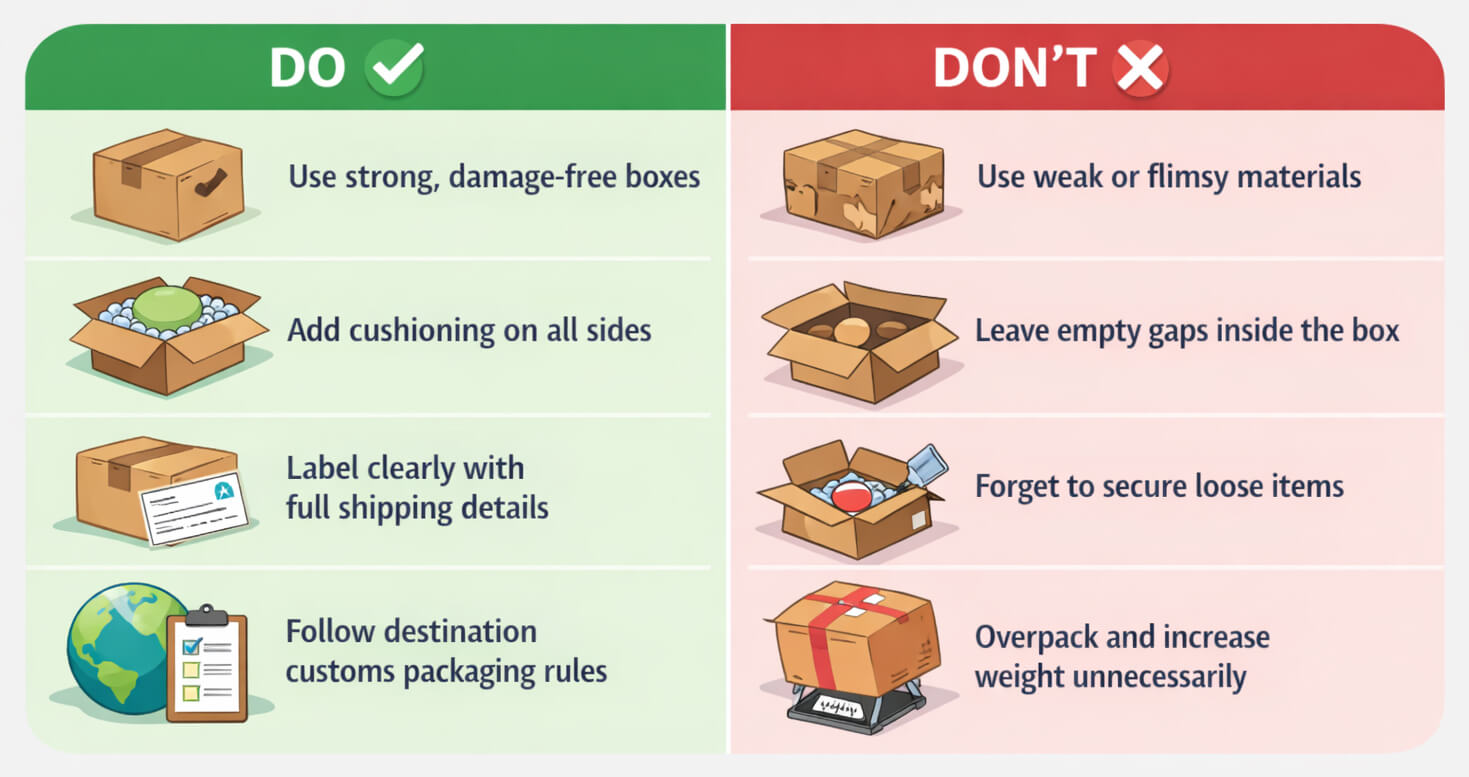
Quick Do’s & Don’ts for International Shipment Packaging
Why Packaging Rules Matter in International Shipping
Packages are handled multiple times during transit
Shipments move through warehouses, ports, and customs checks
Goods face temperature changes, vibration, and rough handling
Every country has different packaging and compliance standards
Even one small mistake can lead to delays, extra costs, or damaged products.
Bonus Tips for High-Value or Fragile International Shipments
Use double-box packaging for added protection
Add custom foam inserts or protective compartments
Monitor shipments with shock or temperature indicators
Secure packages with tamper-evident seals
These extra precautions help minimize risk and keep valuable goods safe throughout transit.
Wrap-Up: Your Roadmap to a Perfect International Shipment
International courier packaging rules don’t have to be complicated; they just need to be followed correctly. When you pack smart, you protect your shipment and speed up delivery.
Right box
Strong cushion
Clear label
Correct documentation
Solid seal
Smart testing
Follow this checklist and your overseas parcel is ready to travel the world - safely, legally, and with fewer surprises.
Frequently Asked Questions
International courier packaging rules include using strong boxes, adding proper cushioning, sealing packages securely, labeling clearly, and following the customs requirements at destinations to prevent damage or delays.
Fragile items are to be wrapped individually in either bubble wrap or foam and then placed inside strong boxes that, on all sides, contain cushioning and also clearly indicate that they are “Fragile” to limit any chances of damage during transportation.
Yes, the international couriers charge on a volumetric weight basis. Large boxes, too much padding, or empty spaces all make packages heavier and unnecessarily raise the cost of shipment.
Yes, shipments need to contain proper invoices, packing lists, and item descriptions correctly. Special packaging, marking, and even documentation for specific products can be required when sending them to certain countries.
Incorrect packaging can lead to shipment damage, customs delays, extra charges, or even the return of the parcel to the sender. Proper packaging helps ensure smooth and timely delivery.