
Send a Courier from India to 180+ Countries
Get a Free Quote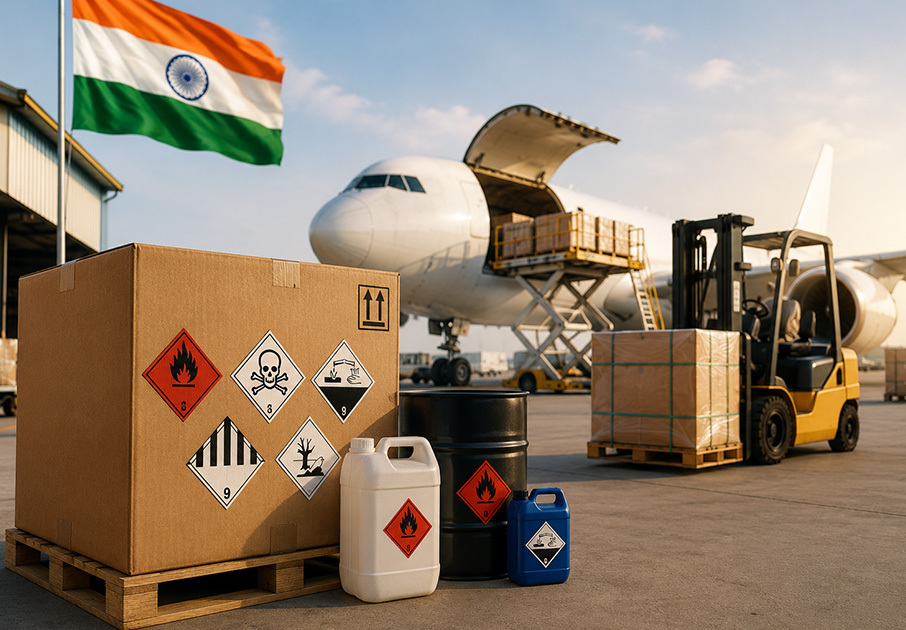
When it comes to shipping regulated products to another country, it involves more than just booking a courier. You’ll find there are various products that may seem completely harmless but fall under the category of dangerous goods and may even cause damage when shipped by air, sea or road.
Before making arrangements for international shipping from India, make sure you’re familiar with the regulations to avoid customs delays, shipment rejections, damaged shipments and additional charges. Whether you are shipping lab samples, commercial items, or industrial chemicals, with proper dangerous goods classification, packaging, documentation, and knowledge of the meaning, your international shipment will be smooth sailing.
The term hazmat is the abbreviated form of hazardous materials and is also known as the full form. Hazardous materials are those substances that may cause damage to public health or safety. Internationally, such products are known as hazardous materials or dangerous goods, based on which regulation is applicable to them in air, sea, road, or multi-modal shipment.
Such examples can be various types of chemicals, paints, aerosol cans, batteries, and much more. Note that not all hazmat goods are restricted; however, most may need certain procedures before shipment.
Dangerous Goods are any article capable of posing a risk during its transportation, due to its inherent chemical properties. They can be explosive, radioactive, toxic, radioactive in nature, and may also be capable of damaging the environment. The shipments are often referred to by international businesses as DG goods or DG cargo. The regulations defining dangerous goods and shipping practices are established by IATA, IMDG, and ADR.
Every shipment that is to be shipped internationally will be subjected to a specific process called dangerous goods classification. The process includes defining the hazard class, assigning a UN Number, selecting appropriate packaging, defining applicable labels, packaging requirements, and transportation restrictions. Failing to properly identify the hazard class will lead to delays at customs, and even the shipment may be refused.
If you’ve been curious, how many classes of dangerous goods are there? Or what are the 9 classes of dangerous goods? Then the list includes:
| Class | Description |
|---|---|
| Class 1 | Explosives |
| Class 2 | Gases |
| Class 3 | Flammable Liquids |
| Class 4 | Flammable Solids |
| Class 5 | Oxidizing Substances and Organic Peroxides |
| Class 6 | Toxic and Infectious Substances |
| Class 7 | Radioactive Materials |
| Class 8 | Corrosive Substances |
| (Class 9 dangerous goods) | Miscellaneous Dangerous Goods, including lithium batteries and environmentally hazardous substances |
There are different types of dangerous goods under certain broad dangerous goods categories, such as batteries, chemicals, perfumes, paints, etc. Some common dangerous goods examples include lithium batteries, cleaning chemicals, paints, perfumes, glues, adhesives, and others that can be damaging in terms of chemical composition.
With regard to aviation, strict regulations are in place regarding the transport of dangerous goods in aviation. The carriers have to follow strict IATA dangerous goods regulations related to the quantity, approved packaging, labeling, and type of aircraft used.
The shippers who plan to ship their products by sea freight need to be aware of the IMDG Code classes. While there are nine hazard classes, the same as for aviation, packing, stowage, separation, and the overall process of carrying out the shipment are different. The decision regarding whether the shipment is being moved through air, sea, or multi-modal will be crucial.
Each hazardous material gets assigned a specific dangerous goods packing group based on the degree of risk the product carries:
The given grouping will help define the specific type of packaging to be used when exporting a shipment.
The shipment of regulated goods needs to be well documented before shipment. Such documents might include a dangerous goods declaration form, also called a DG declaration or a dangerous goods certificate or a dangerous goods declaration. In some cases where an item might not qualify as hazardous, you’ll need to have a certificate of non-dangerous goods or a non-DG declaration to authenticate it.
Safe and secure packaging is the first step when dealing with the shipping of dangerous goods. Regular boxes will likely not work for regulated products as they lack the support and cushioning needed to endure the pressures and temperature variations involved in transit. The products should be shipped in un packaging certificate-certified containers that will be capable of withstanding shock, vibration, pressure changes, and humidity during transit.
The specific packing used will vary depending on the dangerous goods packing group of the product.
In addition, the correct dangerous goods labels need to be placed on every shipment to inform the handlers of the inherent risks associated with the shipment. The DG declaration or dangerous goods declaration form, more commonly known as the shipper's declaration for dangerous goods, will attest to the fact that the shipment has been correctly packed, marked, and labeled in accordance with international standards. A certificate of non-dangerous goods or non-DG declaration should be acquired for products that may not fit into any of the hazardous classifications.
Many are confused about whether we can courier medicines from India to the USA. Yes, but with proper eligibility, the medicines should comply with export regulations in India and import policies of the destination country. For instance, they usually involve having a prescription, a receipt from the pharmacy, KYC, a customs declaration, details of the medicines, etc.
Following the correct how to handle dangerous goods procedures are as crucial as transporting them. This entails using correct packaging and labeling, avoiding spills and leakage, and ensuring separation of incompatible items.
Businesses often want to know how to identify dangerous goods when they are getting ready to ship internationally. If a product is one of the following, it’s possible it’s a dangerous good:
Most of the time, this info will be specified on a product Safety Data Sheet (SDS), specifications sheet, or the product's shipping papers. However, if you’re not sure, get an expert. Don’t rely on this information without a qualified dangerous goods professional.
If you're unaware of how to ship dangerous goods, it is better to use the services of logistics companies that specialize in this regard. The entire process typically entails classification of goods, understanding the rules, using UN-approved packaging, ensuring proper labeling, documentation, customs forms, and finally securing the carriers and the transport.
Atlantic International Express provides expert services for international shipping from India that may include permitted dangerous goods shipping and regulated cargo in compliance with global rules and regulations. We provide professional assistance from our experts in logistics who help with:
Whether you need dangerous goods courier services, dangerous goods air cargo, dangerous goods air freight, or simply want to work with a reliable dangerous goods freight forwarder for your international shipment, our specialists are ready to guide you through the whole process. We also support companies that are unclear whether a product needs a dangerous goods form or requires a certificate of non-dangerous goods. So get in touch now.
Let's understand the hazmat meaning, find the right hazardous materials, and comply with dangerous goods regulations when shipping internationally. If you're dealing with international transport for things like chemicals, batteries, perfumes, pharmaceuticals, lab products, and other regulated commodities, classifying them correctly, certifying packaging, preparing documentation, and adhering to IATA and IMDG standards will help ensure safety and avoid unnecessary delays.
Partnering with an expert logistics and IATA-certified company such as Atlantic International Express will help you ship eligible dangerous goods from India internationally without fear of any additional regulatory or customs issues.
Yes, selected dangerous goods are deliverable from India using approved international couriers when properly classified, packed, marked, and declared in compliance with all prevailing regulations of the destination country, as well as the transport provisions established by the carriers.
We help move numerous specified varieties of hazardous materials out of India. These incorporate specific chemicals, perfumes, batteries for lithium-ion use, samples that are for medical research purposes, and various other controlled products while also staying within the ambit of global shipping and regulations for the transport of these items.
Based on the type of shipment, the documents required for shipping of dangerous materials from India should ideally cover: Dangerous Goods Declaration, Safety Data Sheet(SDS), Bill of Entry, Customs documents, Packing slip Invoice of Sale, UN Package Markings, Certificate of Non-Dangerous Goods (if any).
They are classified as ‘Dangerous Goods’ or ‘Hazardous Materials’; therefore, with adherence to packaging, labeling, documentation and courier norms, they may be shipped to other parts of the world from India.
For a smooth dispatch of dangerous materials from India, the ideal international courier should possess strong technical capabilities in terms of classifying DG contents, adherence to IATA and IMDG codes, approval for packaging, customs clearance, end-to-end shipment visibility, and a worldwide courier network.