
Send a Courier from India to 180+ Countries
Get a Free Quote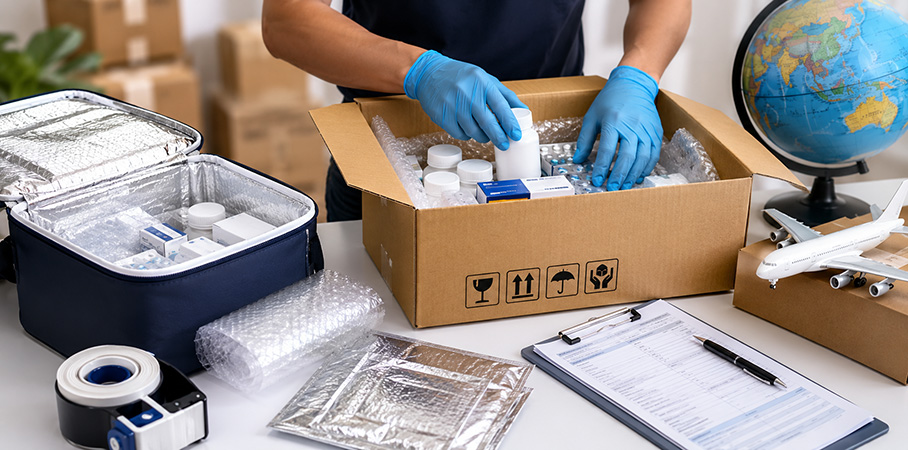
"To pack medicines for international shipping, keep them in their original packaging, use suitable protective packing materials, include the required documents, and follow the destination country's import regulations to help ensure safe delivery and smoother customs clearance."
People often send medicines from India to their loved ones abroad to support their ongoing treatment or for their healthcare needs. Medicines are sensitive products and thus must be packed carefully before shipping. Medicines need proper packaging to protect them from damage during transit and help in a faster process in the customs.
The good news is that shipping medicines internationally is not very difficult as long as you take some important steps. Apart from using appropriate packing materials, one must check the import regulations for the destination country and have the necessary documentation ready.
This guide explains everything you need to know about packing medicines safely for international shipping.
Packing plays a very important role in protecting the medicines during shipment. When sending medicines to USA, UK, Canada, Australia, or any other international destination, medicine parcels are handled by many people at different stages of shipment till they reach the recipient. Proper packing of medicines is very important in avoiding breakage of glass bottles, leakage of liquid medicines, and damage to the shipment packaging.
Proper packing of medicines also helps in the customs inspection process. Properly packed medicines with original packaging and labels help in avoiding delays during customs.
Many people wonder, "Can I send medicines internationally?" The answer is yes. Sending prescription medicine for personal use is legal in most nations. However, every nation has a different set of import laws to determine what medicine is acceptable, how much quantity is permissible, and what documents are required. Reviewing these laws will help avoid shipment and customs issues.
Before packing, you should have all materials and medications ready. You will generally need:
Step 1: Keep Medicines in Their Original Packaging
Always keep medicines in their original packaging as it contains all the important information, including dosage, ingredients, details of the manufacturer, and expiry date. It also helps with hassle-free customs clearance.
Step 2: Pack Different Types of Medicine Separately
Medicines come in various forms, like tablets, syrups, capsules, injections, ointments, and so on. Pack different types of medicines separately instead of placing everything together. This helps keep the shipment organised and reduces the chances of damage.
Step 3: Secure Liquid Medicines
Medicines that come in liquid form need to be handled with extra care. Ensure the bottle is tightly closed and is placed in a leak-proof plastic bag. You can also use bubble wrap to minimize the risk of leakage.
Step 4: Protect Fragile Medicines
Some medications come in glass bottles. In this case, wrap each bottle with a cushioning material. Once the bottles are placed inside the box, fill the space with packing material so that the bottles do not move when being handled.
Step 5: Arrange the Medicines Properly
Place heavier medicines in the box first, and place the lighter medicines on top. Ensure the box is not overstuffed, but do not leave a lot of space to prevent items from shifting.
Step 6: Seal the Package Securely
Secure the box with strong packing tape. Seal all the edges properly to keep the package secure throughout its journey.
Step 7: Attach the Required Documents
Before handing over the parcel to the courier service, keep all the required documents ready with respect to the destination country customs norms.
Different medicines may require different packing methods.
| Medicine Type | Packaging Method |
|---|---|
| Tablets as well as Capsules | Store them in the original blister pack or in their containers. Avoid sending loose tablets. |
| Liquid Medicines | Close the cap of the bottle tightly, put each bottle into a leak-proof plastic bag, and cover it with cushioning material. |
| Creams and Ointments | Seal the lids correctly as well as wrap every tube individually to avoid getting squeezed when handling. |
| Medicines in glass bottles | Make sure to secure each bottle using bubble wrap, and use enough cushioning inside the container to avoid movement. |
| Temperature-Sensitive Medicines | These medicines should be packed in appropriate insulated containers, so they don’t get too warm or too cold during transit. |
When sending medicines abroad, even a minor packaging mistake can create problems. The first most common mistake is removing medicines from their original packaging. This makes customs clearance difficult, leading to delays. The second is using weak boxes or not adding enough cushioning, as it may damage medicines during handling. The third is not checking the compliance of medicines with respect to the destination country customs regulations. Fourth is sending medicines more than the permissible limit, and the fifth is not arranging the documents required for customs clearance.
Spending a little extra time reviewing your parcel can help prevent unnecessary issues.
The documents required depend on the destination country's regulations and the type of medicines being shipped. The following are a few essential documents required:
Documentation varies from one country to another, so it is advised to verify them with your courier service provider to avoid unnecessary delays.
Packing medicines for international shipping can be challenging, especially when you are doing it for the first time. When packing, using the right material is one part, and ensuring the packaging meets international standards and has all the required documents is another part.
Atlantic International Express helps make the process easier by offering a free packaging service, meaning you don't need to think about selecting the appropriate packaging materials. Also, before booking your medicine courier, we check the eligibility of medicines against the destination country import regulations. We also help with customs documentation and assist in filling out the customs forms.
With our live tracking facility, customers can stay informed about the status of their medicine parcel. In case you have questions at any stage of the shipping process, our customer service team is available 24/7 to help you. We deliver to 180+ countries worldwide, and our parcel pickup service is available in most towns and cities of India. Contact us for medicine courier from India with free packaging service.
Packing medicines the right way is one of the most important steps when shipping internationally. Always keep the medicines in the original packaging, use suitable packaging material, and provide essential documents to avoid customs delays. Additionally, check the destination country’s customs norms for permitted medicines, quantity, and packaging standards. Choose a trusted international courier service like Atlantic, offering free packaging, documentation support, doorstep pickup, and online tracking, making international medicine courier simple and convenient.
Yes, prescription medicines in permissible quantities intended for personal use can be sent abroad through a reliable courier service. Ensure the medicines meet the import regulations of the destination country. They should be packed properly and supported by necessary documents like an invoice and a doctor’s prescription.
Keep all the medicines in their original packaging and use bubble wrap to prevent breakage and leakage during transit. Place all the items in a sturdy cardboard box and seal with strong packaging tape. Ensure the medicines are accompanied by necessary documents.
It is best to avoid sending loose tablets, capsules, or pills. Medicines that cannot be easily identified may face customs delays and may not be accepted for international shipping. Medicines must be in their original packaging with clear labels.
Yes, medicines must be in their original packaging for easy identification and information regarding dosage, ingredients, expiry date, and manufacturer details. Also, original packaging protects medicines from light, heat, and moisture.
Yes, you can send different types of medicines in the same parcel. Ensure the medicines are in their original packaging. If medicines are in liquid form or in glass bottles, secure them with bubble wrap or other cushioning material.
Use a sturdy corrugated cardboard box, bubble wrap, air cushions or packing peanuts, and strong packing tape to protect medicines during transit. For liquid medicines, use leak-proof bags, and for temperature-sensitive medicines, use appropriate insulated packaging material if required
When shipping liquid medicines overseas, check if the lid is tightly closed and place them in a leak-proof or air-tight zip pouch. Wrap the bottle in bubble wrap and place it in a sturdy outer box with proper cushioning to avoid movement during transit.